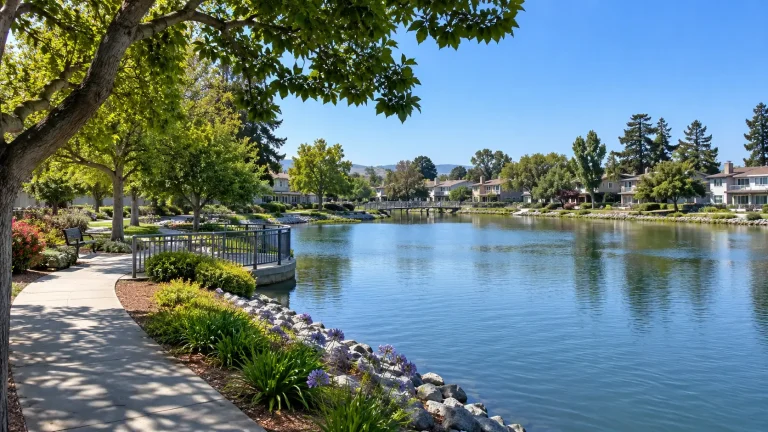
In the middle of downtown San Mateo, a small Japanese garden offers a remarkable connection between California and Japan. Its koi pond, carefully shaped trees, stone features, and wooden bridge create a peaceful setting inside Central Park. But the garden is more than a scenic place to visit. It is a living reminder of the Japanese American community’s contributions and a friendship that began across the Pacific more than six decades ago.
The San Mateo Japanese Garden marks its 60th anniversary in 2026. Dedicated in August 1966, it remains one of the city’s most meaningful cultural landscapes. The anniversary arrives as Central Park enters another period of change, including the completion of a redesigned playground in October 2026. Looking back at the garden’s origins offers a useful perspective on how public spaces can preserve history while welcoming new generations.
A Garden Celebrating 60 Years in San Mateo
The garden was dedicated on August 28, 1966. Historical research included in a National Register documentation draft records a crowd of roughly 2,500 at the dedication. It also describes an extraordinary community effort to turn an idea for cultural friendship into a carefully designed public garden.
The year 2026 therefore marks six decades since residents first gathered to celebrate this new landscape. Unlike a static monument, a garden changes with every season. Trees mature, plants need continual care, and visitors create memories of their own. That combination of history and ongoing life makes the anniversary especially worth recognizing.
How San Mateo and Toyonaka Became Sister Cities
The story begins before the garden was built. On October 8, 1963, San Mateo formally established a sister-city relationship with Toyonaka, Japan, a municipality in Osaka Prefecture. The partnership aimed to encourage cultural understanding through personal connections, education, and civic exchanges.
As the City of San Mateo’s sister-city history explains, the relationship developed into an ongoing program involving young people, community leaders, and visiting delegations. Baseball exchanges became one particularly memorable tradition.
The Japanese Garden gave that friendship a physical home. Instead of remaining only an agreement between governments, the relationship became visible in a public space that anyone could enjoy. The garden’s lasting presence shows how international partnerships can become part of a city’s everyday community life.
The Japanese American Community Behind the Garden
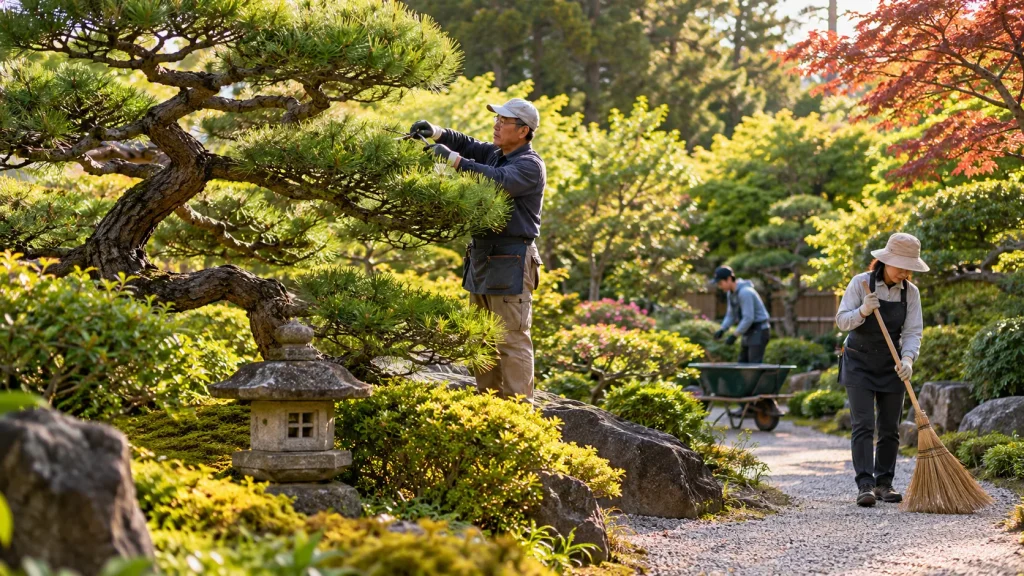
Local Japanese American residents and landscape professionals were central to the project. The San Mateo Gardeners Association helped advance the idea, and a garden-support organization known as Koen-Kai raised money and coordinated the work. Their involvement reflected both professional knowledge of Japanese landscape traditions and a desire to create a lasting symbol of goodwill.
The historical documentation estimates that the organizing group raised approximately $12,000 and that participants contributed around 6,000 hours of labor. Those figures help explain the project’s significance. The garden was not simply purchased as a finished attraction; it was built through sustained local effort.
The San Mateo Arboretum Society’s Central Park history exhibit also highlights the gardeners’ role in proposing and creating the landscape. Understanding that community involvement is essential to appreciating the garden today. Its history belongs not only to city planning but also to the people who devoted time, skill, and care to making it possible.
The Vision of Landscape Architect Nagao Sakurai
The garden was designed by Nagao Sakurai, a landscape architect associated with Tokyo’s Imperial Palace. His work brought Japanese garden design principles to a compact urban setting in California.
According to the City of San Mateo’s official park guide, the garden includes a koi pond, tea house, bamboo grove, and granite pagoda. These features create varied views and encourage visitors to move slowly through the landscape.
A thoughtfully arranged Japanese garden is not necessarily meant to be understood from one viewpoint. Paths, plants, water, and stones reveal different relationships as people walk. That sense of discovery helps explain why the San Mateo garden can feel larger and more immersive than its roughly one-acre footprint suggests.
A Pagoda That Represents Friendship
One of the garden’s most important historical elements is its pagoda. The people of Toyonaka donated the feature in 1966 as a gift to their sister city. It remains a visible reminder of the relationship that helped inspire the garden’s creation.
In its official account of the Toyonaka–San Mateo exchange, Toyonaka describes the garden and pagoda as symbols of friendship between Japan and the United States. The city also notes other exchanged gifts, including an El Camino Real bell in Toyonaka and a redwood tree planted there in 2023.
These objects connect two places separated by an ocean. Each gift has a different form, but all serve a similar purpose: making a long-distance relationship tangible for local residents.
Why the Garden’s Design Still Matters
The Japanese Garden offers more than an attractive backdrop for photographs. Its carefully maintained planting, water, paths, and structures help visitors experience a different pace within downtown San Mateo.
The koi pond introduces movement and reflection. Trees and shrubs frame views while creating shade and seasonal color. Stone elements provide visual stability, and the tea house recalls traditions of gathering and quiet attention. These components work together rather than competing for attention.
They also require thoughtful maintenance. Unlike a building whose original materials may be preserved in place, a living landscape needs regular pruning, plant replacement, water management, and care. Its historical character depends partly on the continuity of those practices.
That is one reason the garden belongs in any discussion of San Mateo historic places: its significance lies in cultural relationships, design, and community stewardship as much as in its individual physical features.
Central Park Was Historic Long Before 1966
The garden’s story fits into the longer history of Central Park. Before the site became public land, it formed part of the estate of shipping entrepreneur William Kohl. The Arboretum Society traces the property to Kohl’s purchase of about 16 acres in 1874, when the grounds were developed with trees, gardens, and walking paths.
San Mateo acquired the property in 1922 and transformed it into a municipal park. Over the following decades, the grounds gained recreational facilities and became an important community gathering place.
The 1960s brought major improvements, including the Japanese Garden. These additions show that Central Park has never been frozen in a single era. It has repeatedly adapted as the city and its residents changed.
Central Park Enters Another Chapter in 2026
That pattern continues today. The city reports that its Central Park playground renovation was completed in October 2026, with a public ribbon-cutting scheduled for November 10, 2026, from 4 to 5 p.m.
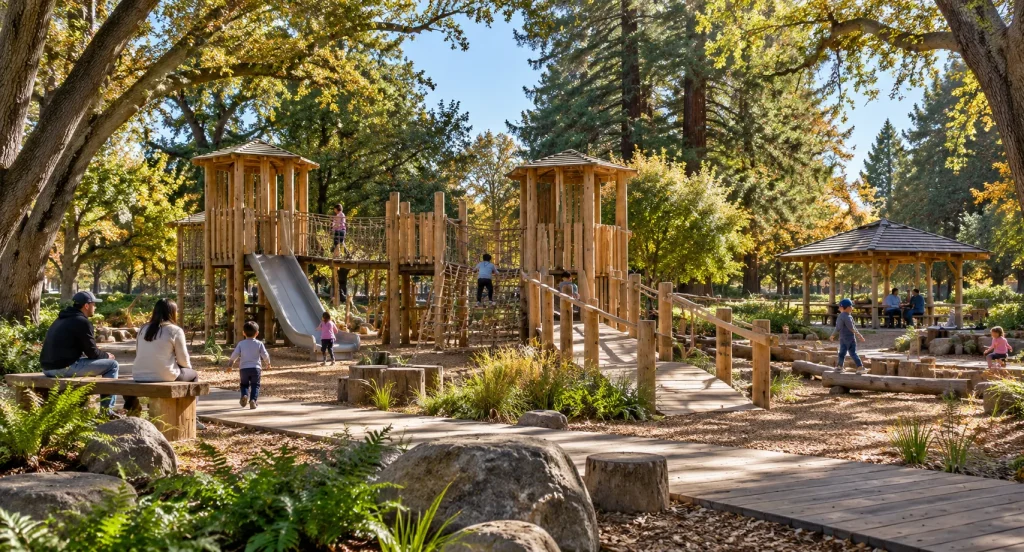
The redesigned play area, called Adventure Village, uses a forest-inspired concept intended to fit beneath the park’s established tree canopy. The project also includes updated walkways, lighting, seating, a covered picnic shelter, and new restrooms.
Although the playground and the Japanese Garden serve different purposes, they tell a connected story. One area provides a quiet cultural landscape rooted in the 1960s; another introduces modern spaces for children and families. Together, they show how a historic park can retain meaningful older features while meeting new community needs.
What the Garden Teaches About Preservation
Historic preservation is sometimes described as keeping old places unchanged. The Japanese Garden offers a more useful interpretation. A place can retain its identity through careful adaptation, regular maintenance, and continued public use.
Its central historical associations remain strong: Japanese American craftsmanship, the 1963 sister-city partnership, the 1966 dedication, and decades of shared enjoyment. At the same time, the living landscape inevitably changes from year to year.
This idea connects with the broader discussion in our article about San Mateo’s historic preservation changes in 2026. Protecting cultural places requires understanding why they matter, not simply how old they are. The garden demonstrates how community memory can survive through active care.
Visiting the San Mateo Japanese Garden
The Japanese Garden is located inside Central Park at 50 East Fifth Avenue, San Mateo, California. According to the city’s published visitor information, it is generally open Monday through Friday from 10 a.m. to 4 p.m. and weekends from 11 a.m. to 4 p.m., excluding Christmas Day.
Visitors can enjoy the pond, garden paths, seasonal plantings, and traditional features. The city notes that late winter and early spring are especially appealing for cherry blossoms. Dogs are not permitted inside the garden, and public koi feedings are seasonal rather than year-round.
Because operating hours and access arrangements can change, check the official Central Park and Japanese Garden page before visiting. For an appreciation of the garden’s history, consider exploring other stories about San Mateo’s parks, neighborhoods, and local cultural heritage.
A Living Legacy for the Next Generation
Sixty years after its dedication, the San Mateo Japanese Garden continues to express the hopes of the people who imagined it: a public place where design, culture, and friendship could become part of everyday life.
The anniversary is an opportunity to recognize the Japanese American residents who helped build it, the designers who shaped it, the people of Toyonaka who contributed to it, and those who continue caring for it. As Central Park welcomes new improvements in 2026, the garden remains a reminder that a growing city can make room for both change and continuity.